BizChina
- Details
- By David Cao
- Hits: 1684

Over the coming decades, will Asia replace the United States as the center of the pharmaceutical world? One of the drug industry’s central figures thinks so.
Dennis Gillings is the 66-year-old founder and chief executive of Quintiles Transnational, a research outsourcing firm that has played a role getting all of the world’s top-selling medicines to market. By correctly predicting the future of the drug industry, he has made a fortune. Forbes estimates his Quintiles stake is worth $700 million. He was among the first to understand that clinical research would be outsourced, that studies would move overseas to Asia, India, and Eastern Europe, and that drug companies would need outsourced sales. As a result, Quintiles now has annual sales of $3 billion. (Click here for my profile of Quintiles from the current issue of Forbes.)
Now Gillings sees Asia – and particularly China – playing an increasingly dominant role in the way that drugs are invented, tested, and regulated, endangering what he says is a “strategic” industry for the U.S.
- Details
- By David Cao
- Hits: 1456
General Motors Co. and its long-time Chinese partner SAIC Motor Corp. said Wednesday they signed an agreement to deepen their technical cooperation and further integrate SAIC into GM's global product-development system.
The move is intended to allow the two companies to share technology and experience more widely to support the joint development of electric cars and components, GM and SAIC said in a joint press release. It is also aimed at creating a greater role for their joint research and technical center in Shanghai in the development of future vehicles and engines.
Read more: Where Can GM and SAIC's Technology Cooperation Achieve?
- Details
- By David Cao
- Hits: 1385
BYD and Geely have been the darlings of China’s auto industry.
BYD, which its Chairman, Wang Chuanfu, says stands for “Beyond Your Dreams,” has received a great deal of media attention due to the large investment in the company made by billionaire Warren Buffet and its leadership position in electric vehicles. Geely broke the equivalent of the sound barrier in China autos when it emerged as the winning bidder for Volvo, the first Chinese car company to make an overseas acquisition of a premium brand.
The news has been so universally positive that, if you’ve been following these two companies, you may have been tempted into thinking that the old adage that “trees don’t grow to the sky” simply doesn’t apply. In that context, news last week that both BYD and Geely have now hit serious potholes on the road to becoming true global companies caught everyone’s attention.
- Details
- By Joel Millman
- Hits: 1508
Timber giants, squeezed by the twin tongs of a U.S. housing slump and a global recession, are starting to stir again in Canada's north woods thanks to insatiable demand from China.
Here in the Lodgepole pine forest 500 miles north of the U.S.-Canada border, workers at one mill move 40,000 logs a day through an assembly line, producing 13-foot-long studs for the Chinese construction industry. Most of the wood will be used to build scaffolding or the forms that concrete is poured into. But the mill's owner, Canfor Forest Products Inc., hopes to be able to export other products, too.
In the meantime, the loggers are grateful for the Chinese demand. The Lodgepole stands were infested with the mountain pine beetle over the past decade, and the voracious bugs killed off trees across millions of acres, leaving the timber prone to splintering. The combination of the bugs' raging appetites and Chinese builders' prodigious output means that producers here will export every log they can process.
Read more: Canada's Mills Lumber Back To Life, Fueled by Chinese
- Details
- By David Cao
- Hits: 1513
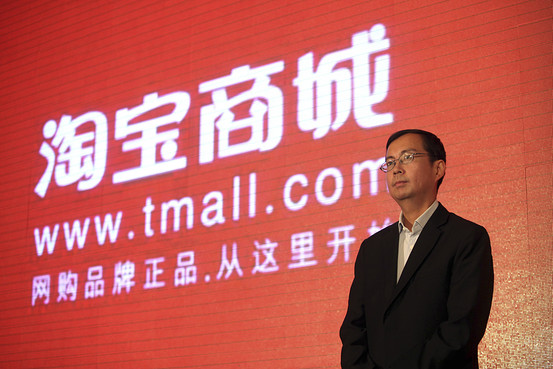
China's Alibaba Group created a new domain for its Taobao Mall business-to-consumer portal, separating the brand from the company's flagship consumer-to-consumer site to give the retail site more prominence.
Taobao Mall, through which such vendors as Adidas AG, Fast Retailing Co.'s Uniqlo and Lenovo Group Ltd. sell goods, now is available through its own Tmall.com Web address. It previously was available primarily through a link on the Taobao.com consumer-to-consumer site.
Read more: Alibaba Gives Taobao Mall Retail Site More Prominence
More Articles …
Page 54 of 126